RED BULL FROM ½ PALLET · FREE UK SHIPPING FROM 1 PALLETWhatsApp +44 7999 150302 ↗

Energy Drink Age Restrictions 2027: What UK Retailers Need to Know
England's planned under-16 energy drink restriction, 2027 start date, caffeine threshold and what retailers should prepare for—plus the latest position in Wales, Scotland and Northern Ireland.

Policy review: 12 November 2026. This article distinguishes announced proposals from legislation already in force. Rules and commencement dates may change; check official guidance before acting.
If you sell Red Bull, Monster or other high-caffeine drinks in a UK convenience store, there is a regulatory change worth preparing for now. England has confirmed plans to stop sales of certain high-caffeine energy drinks to children under 16, with 6 April 2027 as its intended starting date, subject to Parliamentary scrutiny and approval. It is not accurate, as at 12 November 2026, to describe that future England measure as an age-restriction law already in force across the whole United Kingdom.
That distinction is important for retailers. England, Wales, Scotland and Northern Ireland do not currently have one identical set of energy-drink age-sale rules. A shop owner needs to know which products the proposed measure covers, what is changing in their nation and how to prepare tills, staff and online ordering without inventing compliance obligations before the final regulations are made. The following guide uses government policy documents, food-labelling guidance and manufacturer caffeine figures rather than general headlines.
Energy drink age restrictions 2027: what England has announced
On 16 July 2026, the Department of Health and Social Care published its response to a consultation on restricting high-caffeine energy drinks in England. The government decided to bring forward secondary legislation under the Food Safety Act 1990. The intended rule would prohibit selling qualifying drinks to anyone under 16, meaning children aged 15 and younger. It would cover face-to-face retail sales, online consumer sales and places such as cafés. Genuine business-to-business wholesale transactions are outside the intended consumer-sale ban; a cash-and-carry that also sells directly to consumers cannot automatically assume every transaction is exempt.
The government has also decided that sales of qualifying drinks should be prohibited through all vending machines, rather than simply requiring a machine to check the customer’s age. This is unusually important for retailers and operators with vending equipment: the planned approach is not just a checkout age prompt. The full position, including the proposed scope, enforcement and timetable, is explained in the Department of Health and Social Care’s July 2026 consultation outcome. The government expects the measure to begin on 6 April 2027, but that remains conditional on the legislative process.
Which drinks would be affected? Check caffeine, not the brand name
The England proposal is based on more than 150 milligrams of caffeine per litre of drink, excluding tea and coffee. The same threshold is more than 15mg per 100ml, which is the measurement often printed on cans. Drinks with less caffeine are not automatically covered merely because their packaging looks like an energy drink. Equally, a drink labelled Sugarfree or Zero Sugar is not exempt if it exceeds the caffeine threshold. Sugar content is not what determines whether the proposed age restriction applies.
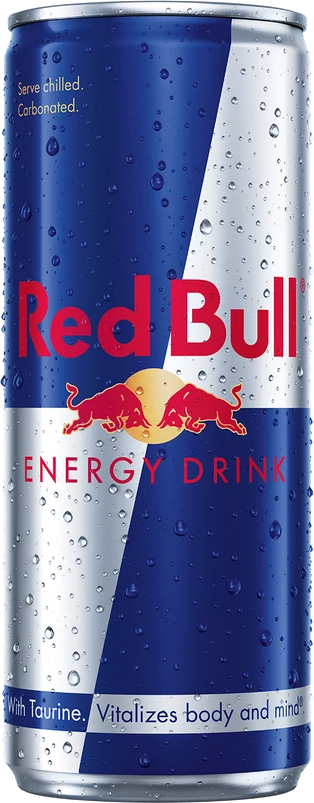
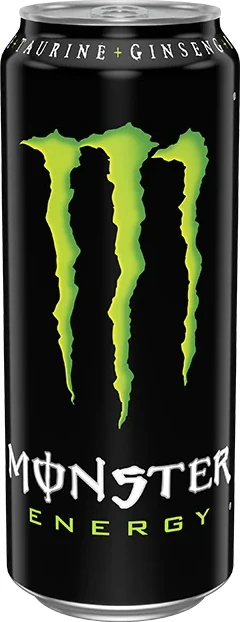
For a concrete calculation, Red Bull’s UK product information gives 80mg in a 250ml Original can: 80 ÷ 0.25 = 320mg per litre. Monster’s UK Original Green product page gives 160mg per 500ml can, also 320mg per litre. Both examples exceed the proposed England threshold. These are specific product references, not proof that every variant or imported market pack has identical caffeine levels.
| Example or threshold | Caffeine level | What it means |
|---|---|---|
| England’s proposed product threshold | More than 150mg/litre | Equivalent to more than 15mg/100ml |
| Red Bull Original 250ml, manufacturer reference | 80mg per can; 320mg/litre | Above the proposed threshold |
| Monster Original Green 500ml, manufacturer reference | 160mg per can; 320mg/litre | Above the proposed threshold |
| Other energy drinks and market variants | Check the actual pack | Classify by caffeine content, not colour, sugar content or brand |
The UK government’s food-labelling guidance explains the existing high-caffeine warning requirement for relevant drinks exceeding 150mg per litre. That labelling rule already exists; it is separate from the future England age-of-sale restriction. Do not assume that the presence or absence of a particular warning on a catalogue photograph conclusively determines whether a product is covered: verify the product’s actual caffeine declaration and follow the final legal definition when regulations are published.
England, Wales, Scotland and Northern Ireland are not at the same stage
Retailers trading across borders should avoid copying an “England ban starts April 2027” notice onto a UK-wide website without explanation. High-caffeine energy-drink policy is devolved. Wales has moved forward with its own plans, but the Welsh Government is still consulting on how its proposed restriction should be enforced and implemented. Its latest consultation opened on 5 November 2026 and is due to close on 17 December 2026. The Welsh proposal also targets sales to under-16s, but an England commencement date must not be presented as the confirmed Welsh start date.
| UK nation | Position as at 12 November 2026 | Retailer action |
|---|---|---|
| England | Government decision announced; legislation planned, with 6 April 2027 as the intended start, subject to approval | Prepare for the proposed scope; check the final regulations before implementation |
| Wales | Separate under-16 proposals; enforcement consultation open until 17 December 2026 | Follow the Welsh consultation and subsequent legislation |
| Scotland | Government did not proceed with a mandatory restriction following its earlier consultation; position remains under consideration | Monitor Scottish Government updates and existing voluntary policies |
| Northern Ireland | No statutory under-16 high-caffeine energy-drink sales restriction identified in the November 2026 Welsh Government four-nation summary | Monitor Northern Ireland-specific official guidance |
The Welsh Government’s November 2026 consultation document sets out its proposals and includes a useful comparison of developments across the four nations. Anyone operating shops or websites in several UK markets should maintain nation-specific policy notes rather than assuming one age rule automatically applies everywhere.
What retailers can do now without waiting for the law
The most useful preparation is a straightforward SKU audit. Start with the energy drinks already on your shelves and create a list containing the exact product name, can or bottle size, caffeine in mg/100ml and current label version. Mark those above 15mg/100ml for a policy review. A small store can complete this with a spreadsheet; larger operators may prefer to add the classification to their electronic product catalogue. Keep the source of the caffeine information alongside each record, because new flavours, imported packaging and reformulations can change the answer.
Next, review how your shop would prevent sales to people under 16 if the England proposal becomes law as described. That might include a point-of-sale prompt, staff training, clear age-verification procedures and an incident log. These are sensible preparation measures, not a claim that a particular technology or exact training script is already legally mandated. For online sellers, the government’s stated approach is to place responsibility on the retailer to prevent underage sales without prescribing one specific online verification method. If your business operates vending machines in England, review which drinks they contain and plan for the government’s proposed complete vending-machine restriction rather than relying on an age-check upgrade alone.
Finally, brief people who order your stock. It should be clear that wholesale purchases for resale are treated differently from direct consumer sales under the England proposal; the retail business remains responsible for its own consumer-facing compliance. For TRIMAYU trade buyers, the wholesale energy-drinks range helps identify the exact products and formats to ask about, but any legal classification should be checked against the actual offered pack.
Does the change mean shops should stop stocking energy drinks?
No. The announced policy concerns who may buy qualifying high-caffeine drinks from a retailer, rather than banning their sale to adults or requiring shops to remove the whole category. For many independent retailers, the task is to maintain a responsible range and make sure staff understand which items fall within the final rules. There is also a genuine commercial distinction between high-caffeine energy drinks, lower-caffeine soft drinks and non-caffeinated hydration products; they should not all be grouped together simply because they appear in the same chiller.
Continue to buy on the basis of your adult customers’ demand, stock turnover and the precise specifications offered by your wholesaler. Keep pack information available when ordering and check price-marked packs, case sizes and best-before dates as you normally would. If you need to order Red Bull, Monster or other energy drinks for resale, request an itemised TRIMAYU wholesale quotation with your chosen products, quantities and destination. The quotation can establish the batch, pack and delivery details; for statutory requirements, use the official guidance and final legislation applicable to your retail location.
The key point for 2027
A retailer who starts preparing now does not need to guess. Keep three facts separate: England intends to introduce an under-16 restriction for drinks exceeding 150mg caffeine per litre, subject to the Parliamentary process; Wales is progressing separate proposals; and Scotland and Northern Ireland must be checked independently. Revisit the government announcements before the intended April 2027 implementation, update your SKU list when pack specifications change and make sure colleagues know the difference between an announced measure and a law already in force.
Editorial note: Policy positions and dates above were checked on 12 November 2026. This guide is general trade information, not legal advice. It should be reviewed against the final regulations before publication or use as a compliance procedure.