RED BULL FROM ½ PALLET · FREE UK SHIPPING FROM 1 PALLETWhatsApp +44 7999 150302 ↗

How to Build a Mixed Energy Drinks Pallet for a UK Convenience Store
A practical UK retailer’s guide to building a mixed energy drinks order: choose Red Bull and Monster cases, compare quantities, check packing and request a quote.

A mixed energy drinks pallet can be a sensible way for a convenience store to buy several products in one wholesale order. Instead of committing all your money to one flavour, you can put together a shortlist built around what your customers already buy, with a little room to test something new. The difficult part isn’t choosing the cans; it’s turning that shortlist into quantities a supplier can pack safely, deliver and price accurately.
If you’re researching a mixed energy drinks pallet in the UK, start with two separate questions: What should my shop stock? and Can those exact cases be assembled into the pallet I want? The first is a retail decision; the second needs confirmation from the wholesaler. Treating them as the same question is how buyers end up with a promising-looking list that doesn’t fit the available case formats or transport arrangements.
What a mixed energy drinks pallet actually means
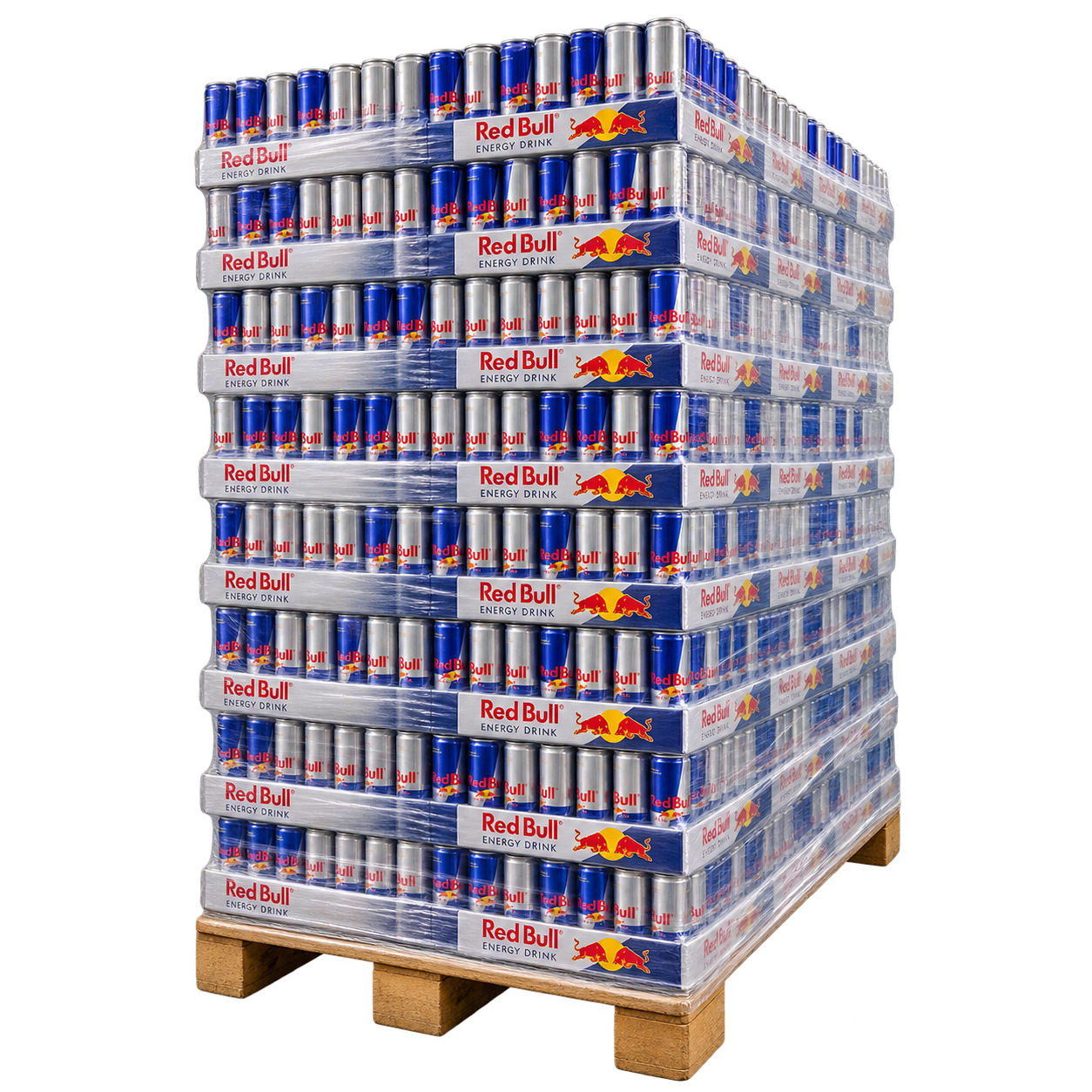
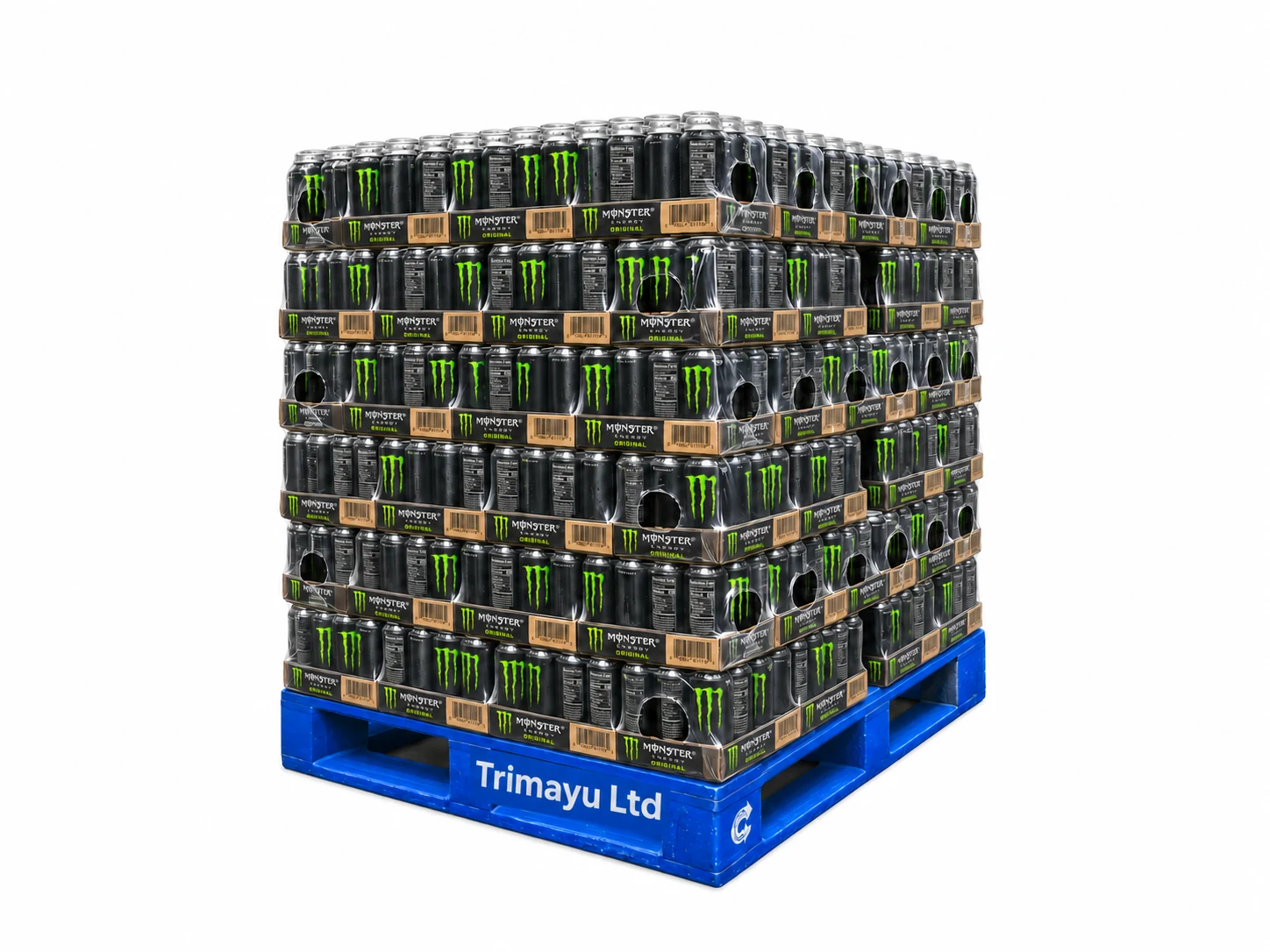
For trade orders, a mixed pallet normally combines complete, unopened cases of different flavours or brands, rather than individual cans picked to make an assortment. A retailer might request Red Bull Original and Sugarfree alongside Monster Original Green, Ultra White and Mango Loco. You can include those named products in a TRIMAYU enquiry, but the final assortment depends on the current stock, its outer packaging and a safe, compatible pallet build. A mixed enquiry is not a guarantee that every combination will fit onto one physical pallet, or that the single-product pallet price automatically applies.
That distinction matters particularly when you combine 250ml Red Bull with 500ml Monster. The cases are different sizes and weights, and they may stack differently. TRIMAYU’s published Red Bull wholesale and Monster Energy wholesale pages provide the available product ranges and standard pack references; the quotation confirms the actual case formats, batch dates and proposed mixed load.
Choose the mix using sales, not guesswork
Before making a shopping list, look at the last few weeks of till sales or stock movement. Which energy drinks sell repeatedly? Which sugar-free options have regular customers? Which flavours have been sitting in the stockroom? One busy forecourt might move mostly familiar core products, while a shop near offices or a gym could see a different mix. There isn’t a reliable nationwide percentage that tells every retailer exactly how much Original, Ultra or Juiced stock to order.
A practical starting point is to give established repeat sellers most of your available budget, keep a sensible share for no-sugar options and test new flavours in smaller case quantities. If you have no sales history, begin with a limited assortment and record what sells. The Association of Convenience Stores’ 2026 Local Shop Report describes continued pressure on local retailers’ costs and margins; that makes avoiding unnecessarily slow-moving stock especially important. This is a reason to plan carefully, not evidence that any particular energy drink flavour will sell best.
A worked case-split example for one convenience store
Imagine a retailer wants five SKUs across Red Bull and Monster. The following is an illustrative purchasing shortlist, designed to show how to communicate a proposed mix. It is not a verified single-pallet load, a live stock offer or a TRIMAYU-approved allocation. A supplier may need to change the split, the total quantity or the number of pallets after checking case dimensions, gross weight and availability.
| Requested product | Case format | Cases requested | Total cans |
|---|---|---|---|
| Red Bull Original | 24 × 250ml | 30 | 720 |
| Red Bull Sugarfree | 24 × 250ml | 18 | 432 |
| Monster Original Green | 12 × 500ml | 36 | 432 |
| Monster Ultra White | 12 × 500ml | 24 | 288 |
| Monster Mango Loco | 12 × 500ml | 12 | 144 |
| Illustrative total | Mixed formats | 120 | 2,016 |
Notice that this plan contains 120 cases but 2,016 cans. The two numbers tell different stories, because 48 of the cases contain 24 cans each and 72 contain 12 cans each. Even the total liquid volume—720 litres in this illustration—doesn’t tell you the packed dimensions or gross weight. Boxes, trays, pallet height, wrapping and load stability must be assessed separately. This is why a wholesaler needs the exact SKU and case count on every line before agreeing a mixed build.
Check the pallet configuration before comparing costs
For context, TRIMAYU currently lists a full-pallet planning reference of 144 cases of 24 × 250ml Red Bull (3,456 cans) and 176 cases of 12 × 500ml Monster (2,112 cans). These figures apply to the stated single-format references. They cannot be added together or treated as a universal capacity for a mixed load. The final mix may use fewer cases, more than one pallet or a different approved arrangement, depending on how the cases fit and what the carrier can handle. The TRIMAYU pallet-order planner is useful for building a product list, but its calculated quantities do not reserve stock or verify physical packing.
Then compare the quote on a consistent basis. Ask for the price per case, number of cans per case, VAT treatment, total goods value and delivered total. A 12-can case can appear cheaper than a 24-can case without being better value per can. For a mixed order, check the individual landed cost and expected resale margin of each SKU rather than using one average price across differently sized drinks. If you want to test a few flavours, include the possible cost of slower sales in that decision too.
Make delivery and shelf life part of the order, not an afterthought
For a UK shop, the delivery postcode and unloading arrangements matter almost as much as the product list. TRIMAYU’s published policy says UK delivery is free from one full pallet, while a Red Bull half-pallet has separately quoted delivery. That does not mean an unconfirmed mixed assortment automatically qualifies as a full pallet. State whether you have a forklift, loading bay or need to discuss tail-lift unloading, along with opening hours, access restrictions and where the delivery can safely be received. The Health and Safety Executive’s delivery safety guidance explains why the supplier, carrier and receiving site should agree responsibilities beforehand.
Also ask for the actual best-before dates on the proposed batches, especially when trialling flavours that may sell slowly. Record your desired minimum remaining shelf life on arrival, not just at dispatch. Where different products have different dates, set up stock rotation so earlier-dated cases are used first. A mixed pallet only helps cash flow if its assortment can sell within your shop’s realistic buying and storage window.
Send a quotation request a supplier can act on
A useful request takes less than a minute to understand: business name, delivery postcode, exact brand and flavour for each line, can size, cans per case, number of cases, minimum remaining shelf life and any price-marked-pack preference. Add whether substitutions are acceptable and which products are essential. Finish with your receiving hours and unloading details. The supplier can then say which lines are available, whether the requested split can be packed as proposed, how many pallets are needed and what the actual delivered order will cost.
For TRIMAYU, UK requests can include more than one energy drink brand or flavour, subject to stock and packing checks. If you’re planning your first mixed order, start with the products that reliably sell in your shop and treat everything else as a test rather than a permanent fixture. When your shortlist is ready, request an itemised wholesale quotation and ask for confirmation of the final case allocation, pallet arrangement and delivery terms before approving the order.